

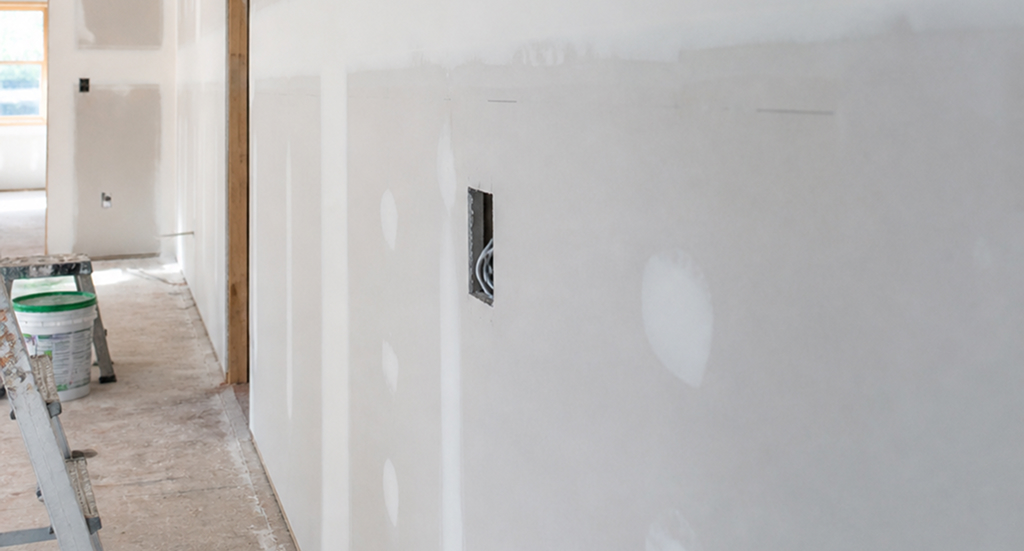
After a repair, remodel, or new drywall install, the patched area can look obvious—even when the paint color is correct. Homeowners, property managers, and remodelers across the Portland metro often notice this when a ceiling patch or a new wall ties into an older room. This guide explains why textures don’t match automatically, what affects the final look, and how to choose between texture matching, a new texture, or a smooth finish.
Why Patched Areas Stand Out
Texture is a combination of material, application method, and lighting. When a repair introduces fresh mud and new sanding into an older surface, differences appear in three common ways: profile (raised vs. flat), pattern (knockdown size, orange peel density, or swirl direction), and sheen variation after paint. Even small changes in compound thickness or knife angle can create a shadow line. On ceilings, raking light exaggerates these changes, making a well-repaired area still look different until the texture is matched and the surface is primed and painted consistently.
What Affects Texture Matching
Several practical factors influence consistency: 1) Existing finish type—orange peel, knockdown, hand-textured, or smooth coat each requires a different approach. 2) Age of the surface—older walls may have multiple paint layers and prior touch-ups that change how new compound sits. 3) Compound and tools—different mud thickness, nozzle, roller, or spray tip will change the texture profile. 4) Room lighting—windows and can lights reveal highs and lows. 5) Substrate movement—framing or existing seams can telegraph through if not prepped properly. Knowing these variables upfront helps set the right plan for matching the surrounding room.
Texture Options After Repairs and Remodels
Homeowners and remodelers typically choose from three paths: 1) Texture match: Blend the new area into the existing wall or ceiling so the patch disappears under normal lighting. 2) New texture: Re-texture a full wall, ceiling, or room to refresh an inconsistent finish or update from heavy knockdown to a lighter pattern. 3) Smooth finish: Skim and finish to a smooth wall or ceiling, often used in remodels where a cleaner look is preferred. Each option affects scope and prep—matching is targeted, new texture requires broader application, and smooth finish needs more skim coats and sanding.
Process: From Patch to Consistent Finish
A typical workflow includes: 1) Assess the existing finish and lighting. 2) Prepare the area—secure framing if needed, set fasteners, tape seams, and apply joint compound. 3) Build the surface—feather coats wider than the damaged area to reduce edge lines. 4) Texture application—spray or hand-apply to match pattern density and profile, then adjust with knockdown or touch tools. 5) Prime and paint—use a quality primer to even out porosity, then apply consistent sheen and color. This step is essential: paint alone cannot hide a mismatched texture, but it is required to finalize uniform appearance.
When a Full Wall or Ceiling Needs Re-Texture
Sometimes a spot repair won’t disappear because the surrounding finish varies from prior touch-ups or previous remodels. In apartments or multi-unit turns, property managers often approve a full wall or ceiling re-texture to maintain unit-to-unit consistency. In remodels, shifting from a dated heavy texture to a finer pattern can help new additions blend better. If multiple patches exist or lighting highlights uneven patterns, re-texturing the entire surface is usually the cleaner, faster path to a uniform result.
Smooth Finish: Pros, Cons, and Considerations
A smooth finish offers a clean, modern look but demands more prep. Expect multiple skim coats, careful sanding, and strict dust control. Smooth walls reveal imperfections under direct light, so attention to flatness and joint transitions is critical. This choice works well in renovations where new drywall was installed alongside older walls, or when a homeowner wants a consistent finish across connected rooms. If you’re debating smooth vs. textured, evaluate how your space is lit and how frequently walls may be patched in the future.
Painting and Sheen: Why It Still Looks Different After Color Match
Even with perfect color matching, differences in primer and sheen can telegraph surface variation. New mud absorbs paint differently than existing surfaces. Using a dedicated primer levels porosity so topcoat sheen appears even. For repairs, it’s best practice to prime the full wall or ceiling plane rather than just the patch, especially if the room has directional light. This approach reduces flashing and helps hide subtle transitions in texture height.
Deciding Your Next Step
If a patched wall or ceiling stands out, start with identification: name the existing texture, check the room lighting at different times of day, and look for prior touch-ups. For single patches in otherwise uniform rooms, targeted texture matching is usually sufficient. For rooms with multiple repairs or inconsistent finishes, a full re-texture may be more efficient. If you’re considering a smooth look during a remodel, plan for added prep and dust protection. For hands-on help with finish consistency, see our Drywall Textures service for matching and new textures, and visit Drywall Repair for patch preparation or Drywall Installation & Remodeling for new spaces tying into existing rooms.
Texture differences are normal after drywall repairs or remodels, especially under strong light. The solution is a clear plan: match the existing pattern when a single area needs to disappear, re-texture when surfaces vary across a room, or choose a smooth finish when renovating for a new look. For projects in the Portland metro—whether a ceiling patch, an addition tying into an older room, or apartment turnover—consistent texture, proper priming, and even paint are what make repairs blend in.
Frequently Asked Questions
Paint evens out color, but it can’t mask a different texture profile or porosity. Fresh compound, sanding, and tool marks change the surface’s pattern and sheen, which raking light on ceilings or near windows makes more visible. A proper texture match plus primer is needed for a uniform look.
Match the texture when the surrounding finish is consistent and you want the patch to disappear under normal lighting. Re-texture a full wall or ceiling if prior touch-ups, multiple patches, or dated patterns make spot blending obvious. Choose a smooth finish for a cleaner, modern look—but plan for more skim coats, sanding, and dust control.
Start by assessing the existing finish and lighting, then secure framing, set fasteners, and tape seams. Feather joint compound wider than the damaged area, apply the texture to match pattern density and height, and adjust as needed. Finish with a quality primer to even porosity, then apply consistent sheen and color.